Wednesday, March 8, 2017

Another Transition: How the World Works to How We Express Ourselves

Last Friday, illustrator Ross Kinnaird shared his artwork and skills with us, as well as his sense of humor. Although we have not ended our inquiry into energy, it was a good opportunity for the students to get started with the next unit, How We Express Ourselves.

Thanks, Mr. Brittain, for the photo!

During the unit, children will analyse and create visual art. In order to prepare for Ross Kinnaird's visit, some of the fourth graders responded to a poem that felt funny, cozy, and comfortable by experimenting with some of the elements of art (line, shape, color, space, value, form, and texture) to create a similar effect in an illustration:


Some of the fourth graders also had the opportunity to analyse art that has strong connections to the next unit's central idea: Creating and responding to art develops understanding of ourselves and the world around us. Using knowledge gained during the Rights, Responsibilities and Rules unit about social issues, the children observed artwork by graffiti artist Banksy and artwork by Pawel Kaczynski, recording their connections and other observations beside the artwork: 


As part of How the World Works, children prepared for the summative task by experimenting with electrical circuits. Although they made simple circuits earlier (noting how energy is stored and transformed), using other energy output devices and batteries to create various series circuits and parallel circuits was an enjoyable challenge.


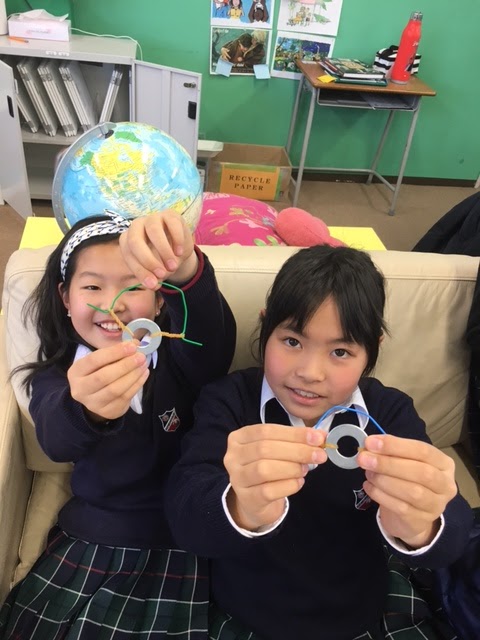
The summative task is to use our knowledge of circuits to create a "toy". Here are some of the fourth graders hard at work:


Sunday, March 5, 2017

Growing As Informational Writers


Self Assessments and Peer Feedback in Informational Writing

In the Writing Workshop, fourth graders are currently writing informational drafts. They are using their power as communicators to inform and teach readers about a topic they know well. They collected ideas for their topic, organized the structure of their writing and drafted their first informational piece of the unit. 


After completing their first draft, writers were reflective by self assessing their writing using the Information Writing Checklist. They checked the areas they felt they had included in their drafts such as organization, strong leads, ending, elaboration, etc.  The areas they may have left out or not yet developed, will most likely become their writing goals to develop in their next draft.


Peer feedback is one of the most effective ways that writers in the workshop can grow and improve their writing. After each writer reads a classmate's piece of writing, they share useful and specific feedback that will help the writer. Often times, feedback includes a compliment on a technique the writer used well, and a piece of advice the writer could use when working on their next draft. 


 As the unit continues, we look forward to continue growing as reflective learners and writers by using our self assessments and peer feedback.


Thursday, February 23, 2017

Math Celebration Today! / Exploring Parts and Wholes

Today, third graders and fourth graders joined forces to celebrate mathematics learning. They shared math games and math strategies with parents, students in other grades, and teachers. Mr. Hughes commented that the "students were fantastic this morning - lot's of engaging games for different areas of Mathematics... They did a great job sharing the different strategies used in the classrooms." We hope you agree!


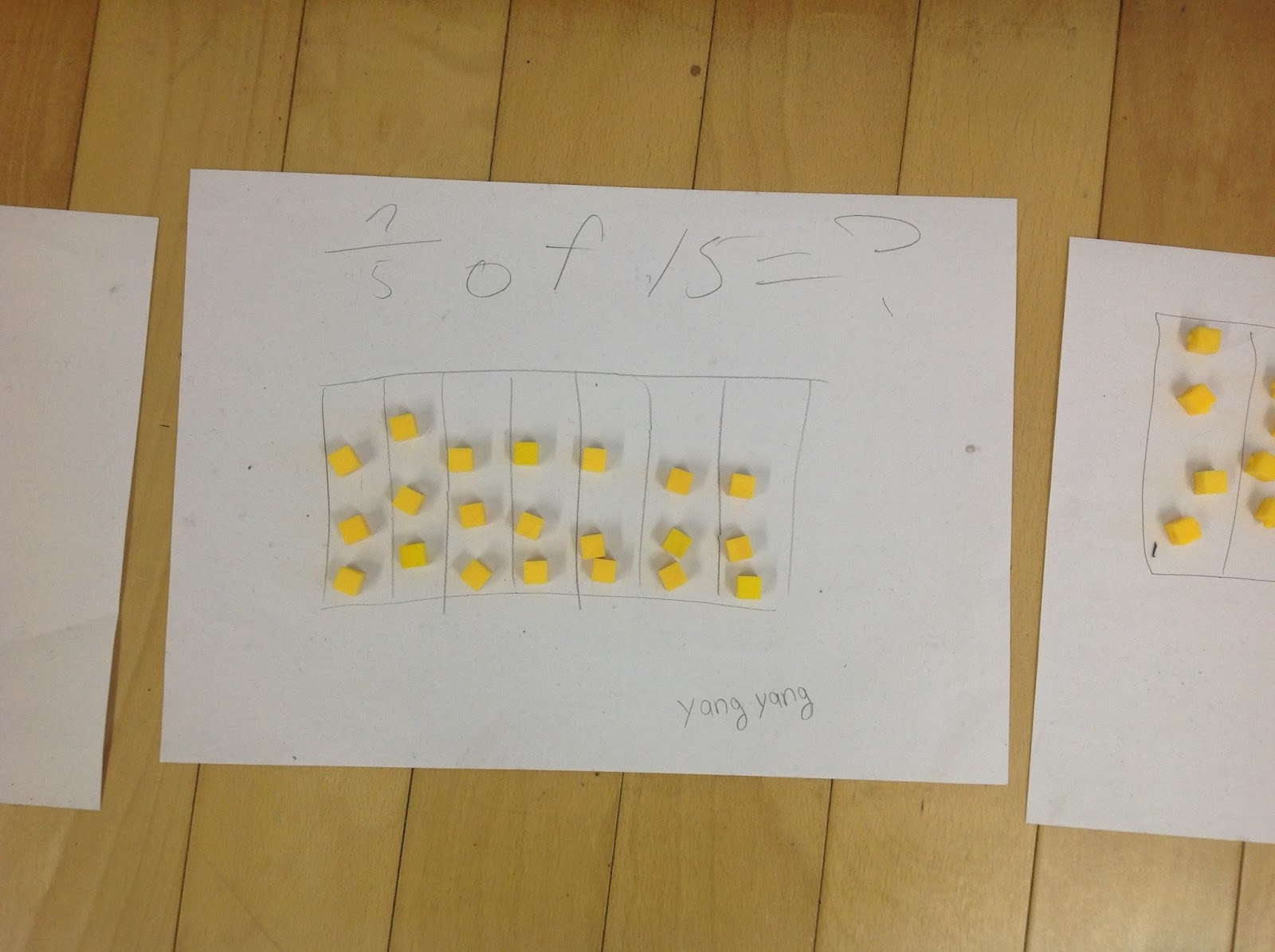
At this time, the main focus of mathematical investigations in fourth grade continues to be parts and wholes, especially fractions. We began with lots of models, including shape models, line models and set models, such as the ones below:


Even students who are able to solve addition, subtraction and multiplication problems of fractions using algorithms can have difficulty demonstrating an understanding of the problem with a model. Trial and error is challenging, enlightening and fun.


We are also developing strategies to compare and order fractions. After that students will take a look at other ways of representing parts and wholes: decimals and percentages.


Monday, February 20, 2017

Semester Two Learning Outcomes

Below you will find the Semester Two intended learning outcomes for all subject areas.  Click on the links to view and download the documents.  If you have any questions about these learning outcomes, please contact your child's homeroom teacher, our PYP Coordinator (Michael Hughes), or our Elementary Principal (Sandra Mulligan).


Sunday, February 12, 2017

How the World Works

Our current unit in How the World Works on Energy has been quite exciting. After becoming familiar with the different forms of energy that we experience in our daily lives, we took our thinking further by inquiring about how energy transforms. 

Our lines of inquiry are:

● Different forms of energy ● How energy is used and transformed ● The Scientific process


We have learned that there are more to toys than just fun and games. Toys have energy and can create energy transformations! 


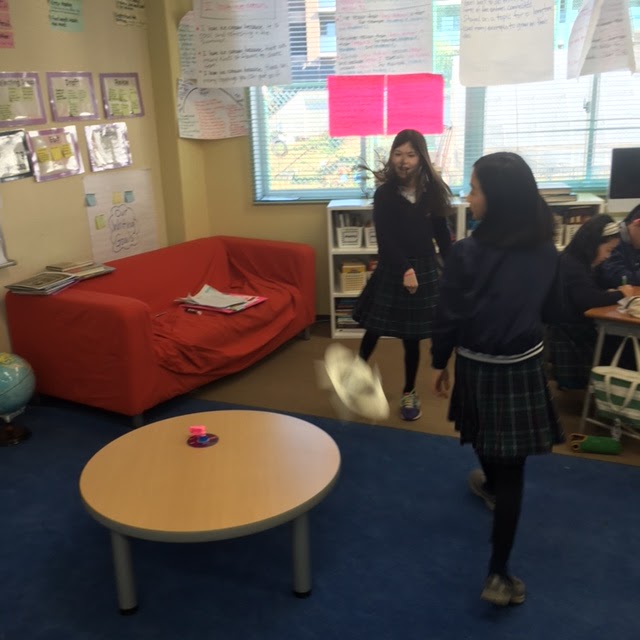
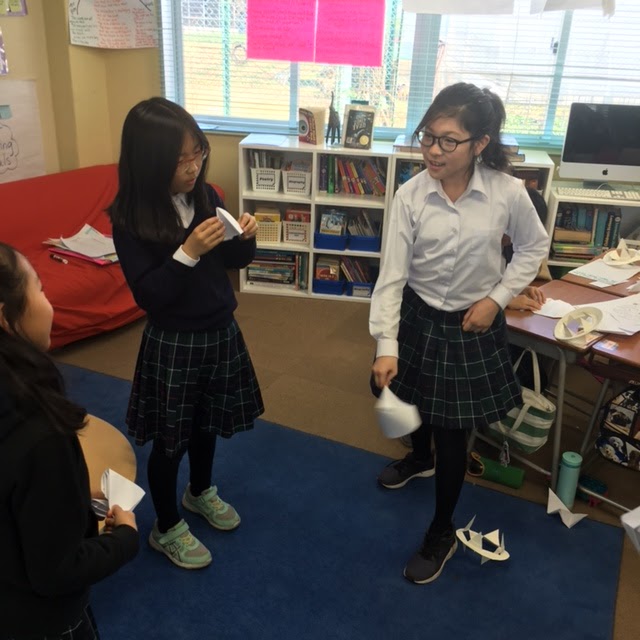
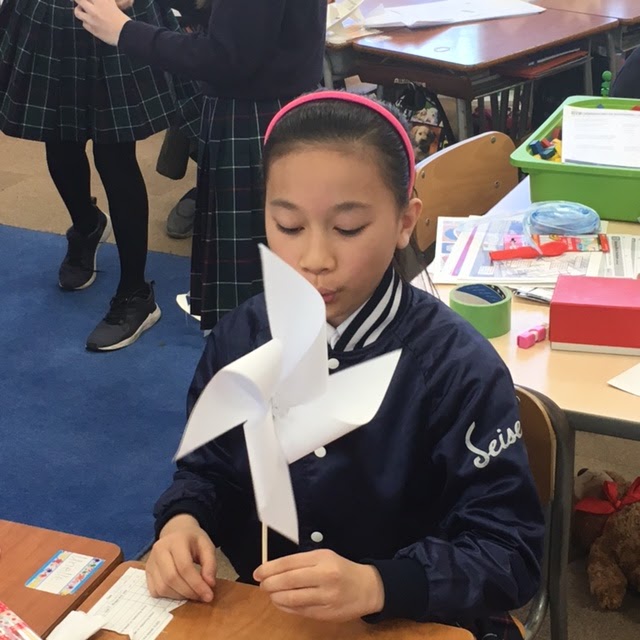
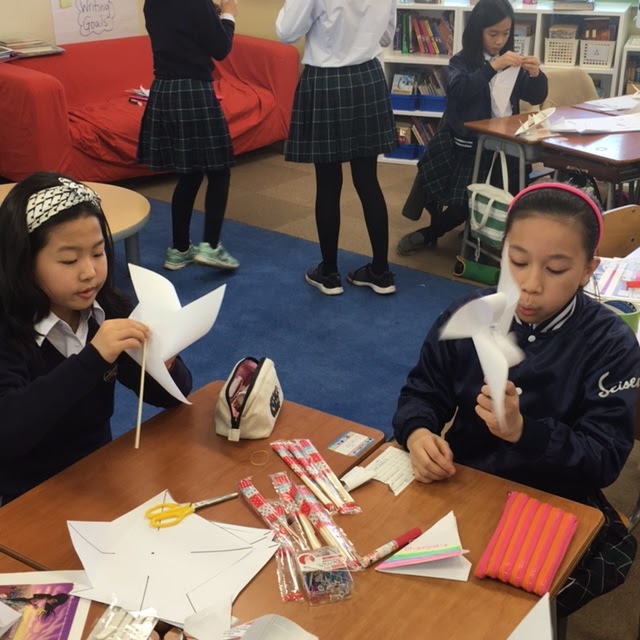
Fourth graders built paper bangers, gas machines, flying plates, and paper windmills. As they played, they observed what form of energy each toy had and how that energy was transformed into a different form of energy.  


After observing how energy was transformed in each toy, they begin to experiment with variables and tested out their own questions. One questions was "Which material will make the loudest bang?"
They found that in order to create a fair test it was important to keep certain variables the same and to change the variable they were testing.  To find out which material made the loudest bang, ask your daughter about the results. 


Thursday, February 2, 2017

Rights, Responsibilities, and Rules Transitions to Energy

This week fourth graders got started on the How the World Works unit, which focuses on Energy. However, on Wednesday, an opportunity to revisit Rights, Responsibilities and Rules came up and we took it.

Genevieve Bassett, a high school teacher at St. Mary's, visited. Ms. Bassett participated in the recent Women's March in Tokyo and shared her experience with us about the March and her thoughts about taking action in general. 


During the Rights, Responsibilities, and Rules unit, children learned not to take rights for granted. Although the Convention on the Rights of the Child has been signed by most countries in the world, it is our responsibility to ensure that rules uphold rights for all. The fourth graders bombarded her with lots of excellent questions at the end of her presentation.

One activity that some fourth graders participated in to get started thinking about energy involved sorting energy related phrases by whether it seemed more true or more false.


In this way, various misconceptions or issues about energy came out, giving us an opportunity to debunk and/or rethink them. I captured a little. Please see for yourself: 


Finally, fourth graders got started thinking about energy this week by creating "toys". Putting them together and messing around with them gave them the opportunity to contemplate forms of energy in everyday life. We will consolidate that knowledge in discussion and other activities by considering how energy moves (transfers and transformations). Hopefully, your child will be able to explain those terms to you in the coming days.


Monday, January 23, 2017

Rules, Rights, and Responsibilities 

Fourth graders have been working together to explore Human Rights, specifically looking at the Convention on the Rights of the Child created by the United Nations.  Throughout this unit they have used their research skills to learn about different organizations that exist to support and uphold children's rights. While learning about these organizations, they have become aware of the responsibilities that we all have to make sure the rights of all children are upheld.


While reading articles on current events, they were able to make connections to specific rights being denied in different situations through out the world.


Fourth graders took action by pairing up to make posters for each of the articles in the CRC document. They learned that according to the CRC, teaching other children about the CRC is one of their responsibilities as a human.