Thursday, April 20, 2017


How We Express Ourselves: Expression Through the Arts

Fourth graders have been creating their own artwork keeping the elements of art and principles of design in mind. They focused on using different elements of art to enhance the mood and message of their artwork. 

After looking at the artwork of world famous Japanese Artist, Yayoi Kusama, the fourth graders were inspired to create their own Yayoi Kusama pieces using oil pastels.  They focused on the elements of color and shape, and the principles of pattern and balance.  


Fourth graders also studied works of art from famous impressionists like Van Gogh and Monet. They learned that often times impressionist paintings have exaggerated colors and obvious brushstrokes. Landscape paintings were also very common during the impressionist movement.  Inspired by the sakura outside, they painted a landscape of Mt. Fuji with a sakura in the foreground. They focused on the elements of texture, color, and space. 


Wednesday, April 12, 2017

Writing (and Reading) Poetry

Fourth graders recently finished a unit about information writing, which is one of three major genres taught at Seisen. (The other two are narrative writing and opinion writing.)


This week, both classes started a writing unit about poetry. We began, as we often do, by determining what we already know, which is in red. Those ideas lead to questions and information to find out, in green. We also added new information in brown.


The children's initial ideas about poetry included "rhyme", "repetition", and the "the way it sounds is rhythmic". 4A made connections between those ideas and the following quote by Paul B. Janeczko:


"You are trying to create a music with the words in your poem. It might be sweet music or it might be harsh music, but you must have your ears open when you write (and read) poetry."


Therefore, one way we will inquiry into poetry is by investigating how poets use words to create "music". We will add more!


To become better poetry writers, we will, of course, read lots of poems. Sometimes we record our thinking carefully on the text, as a whole class, with partners, and individually. It's a really productive way to analyse the writing, because it leads to a deeper understanding and appreciation of the poem.


Friday, April 7, 2017

How We Express Ourselves

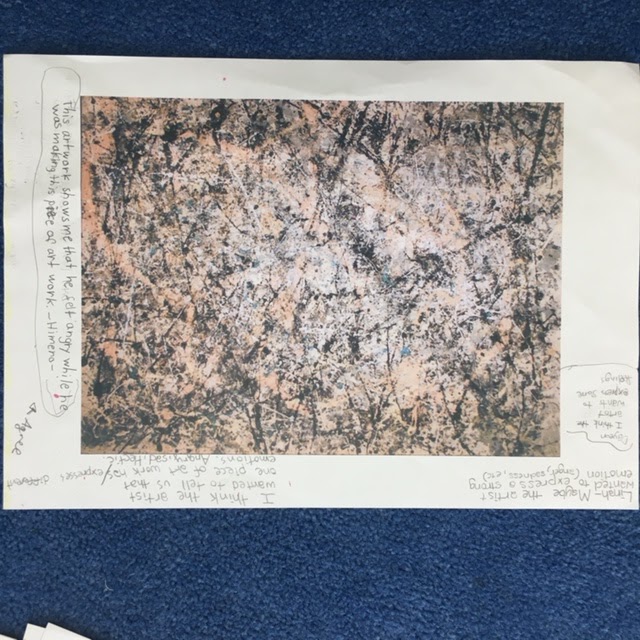
The fourth grade is currently in the How We Express Ourselves unit of Expression Through the Arts. This week we looked at some famous pieces of abstract art by Jackson Pollock, Piet Mondrian, and Wassily Kandinsky. Focusing on the elements of art used, we tried to interpret the mood and the artist's message. The fourth graders have become very familiar with the elements of art and presented in "expert groups" about an element of art.  


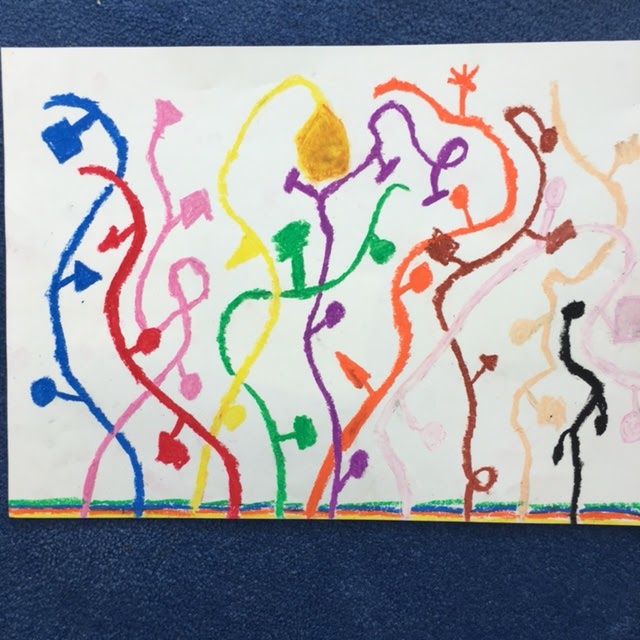
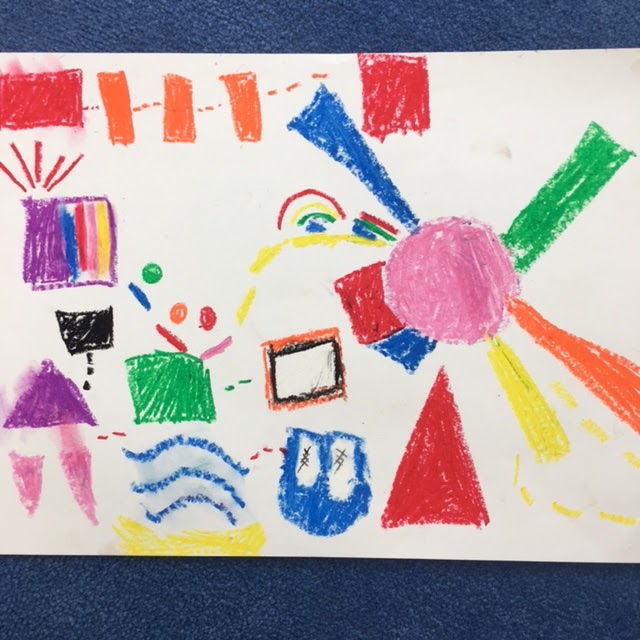
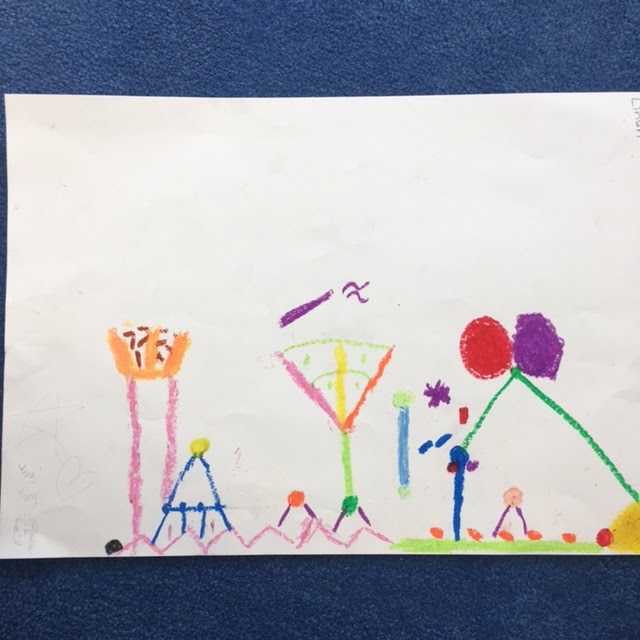
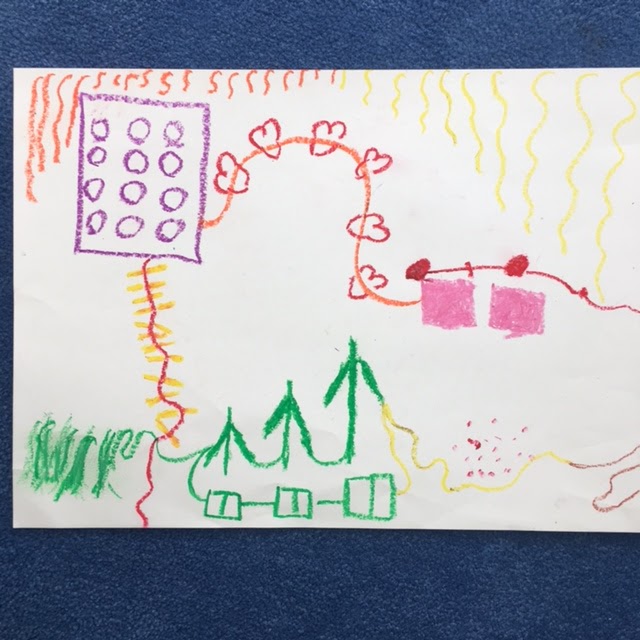
After critiquing well known works of art, fourth graders created their own pieces of abstract art symbolizing their personal life journey. As reflective learners they thought back on the major events in their lives and important people and things in their lives.  They focused on the elements- line, color, texture, and shape to create a piece that would evoke feelings in the viewer. 


Wednesday, March 29, 2017

Dancing Parallel and Series Circuits

How could students "translate" their knowledge of parallel and series circuits into creative dance pieces?

First of all, students discussed what they knew about how electricity moved in a parallel circuit and a series circuit.  They looked at simple diagrams to clarify their thinking.
 

Students imagined that they could be one of the light bulbs in these diagrams.  How could they show each of these circuits?

They began by creating an 8 count sequence in a small group.  

As a parallel circuit, the energy flowed between all of the "pathways."  All of the dancers moved in unison.  Even if one dancer stopped, and the others could continue the sequence to show the flow of energy.  

In a series circuit, however, the students imagined that the flow of energy passed through each dancer at different times.  One dancer began their sequence, and the others started in a "contagion" or "canon" one after the other.  In this way, the dance showed how the energy flowed through the circuit.  

Students used some of the following dance concepts:
 Shapes (based on poses of professional dancers)
 Use of various body parts
 Energy: sharp or smooth energy
 Weight: powerful or delicate 
 Levels: high, middle, low
 Use of varying relationships
 Choreographic devices: canon

They are learning to collaborate in small groups to express their ideas.  By using classroom concepts in dance, they nurture their creativity and make new connections in their learning.

These videos are not their final work, but a snapshot of where they were at during their class. 


SaveSave

Thursday, March 23, 2017

Elements of Art & Reading

During student-led conferences on Monday, you had the opportunity to visit a gallery of elementary art in the Multi-purpose Room - thanks to Ms. Diane! Since our current unit, How We Express Ourselves, focuses on art, we took the opportunity to hunt at the gallery for examples of artwork that features each element of art. We did not come away disappointed.


Color! 
Space!

Line!

Texture!

Value!

Shape!


& Reading...

Both fourth grade classes are engaged in reading groups. Fourth graders in 4A are finishing up their books today. During the first week back after break, they will be busy responding to what they read with more discussion, more writing, and projects. Their books should be filled with sticky notes that show their thinking. Here are examples of the kinds of thinking that will push them to develop a deeper understanding of the story or text: 


Questioning - We write questions that show curiosity.
Monitoring Meaning - We write questions when confused.

Determining Importance - We keep track of what's important.

Using Schema - We make important connections.

Applying Fix-Ups - We do something about it when we're confused.

Synthesizing - We reflect on our thoughts and make statements about the big picture, explaining what we think overall.

Visualizing while we read, using all the senses - sights, sounds, feeling, smells, textures, tastes - helps us understand the text too.

Drawing Inferences - Making predictions and guesses about what we read also helps us dig deeper into the overall meaning of the text.

Sunday, March 19, 2017

Electric Toys

As the Energy Unit came to an end, fourth graders shared their learning by presenting their very own electric toys. Fourth graders designed toys using electric circuits and materials such as motors, lights, batteries, switches, and wires. As collaborators they worked in partnerships to create a toy that was functional and interesting to play with. 

Using their communication skills they presented how their toys functioned making sure to discuss the type of circuits they used, and the energy input and output devices. 

Electric Kitten
Toy Presentation
Disco Boat
Spinning Plate
                
Bubble Maker

Spinning Plate


Bubble Maker and Fan
Frog in Pond


Easy Working Dustpan